Friday, March 31, 2023

best twitch ad blocker

Introduction

As Twitch continues to grow in popularity, so does the use of ad blockers to avoid advertisements on the platform. While using ad blockers may seem like an easy solution to skip ads and support the streaming experience, it raises ethical concerns about the financial impact on streamers and the Twitch platform.

The Most Ethical Twitch Ad Blocker

While many ad blockers exist, the most ethical option for Twitch is to not use one at all. By allowing ads to play, you support the streamers you watch and the platform that hosts them. Twitch ads provide a significant source of revenue for streamers, and by blocking them, you are essentially taking away their ability to earn a living.

However, if you must use an ad blocker, there are options that are more ethical than others. For example, some ad blockers allow you to whitelist specific channels, so ads will still play on those channels, while others block all ads on the platform.

Adblock frontpage

Best Twitch Ad Blockers

There are several ad blockers available for Twitch, but some of the most popular ones include:

  • AdBlock
  • AdGuard
  • uBlock Origin

These ad blockers are easy to install and use, and they can effectively block most of the ads that appear on Twitch. Some of them also offer additional features, such as the ability to whitelist certain channels or support for multiple devices.

Why You Should Use an Ad Blocker on Twitch

There are several reasons why you might want to use an ad blocker on Twitch:

  • To avoid annoying and repetitive ads
  • To save time and improve your viewing experience
  • To protect your privacy and security from malicious ads

By using an ad blocker, you can enjoy your favorite Twitch streams without having to deal with the interruption and frustration of ads.

How to Support Streamers with an Ad Blocker

While using an ad blocker can help you avoid ads, it can also have a negative impact on the streamers you watch. Ads provide a major source of revenue for streamers, and by blocking them, you are essentially taking away their ability to earn a living.

Fortunately, there are ways to support streamers even if you use an ad blocker. One way is to subscribe to their channel or donate directly to them. Another way is to whitelist their channel in your ad blocker, which allows ads to play on their channel while still blocking them on other channels.

By supporting streamers in these ways, you can enjoy your Twitch viewing experience without having to feel guilty about depriving streamers of their much-needed revenue.

Why You Shouldn't Use an Ad Blocker on Twitch

Using an ad blocker on Twitch not only takes away from the streamer's ability to earn revenue, but it also harms the platform as a whole. Twitch uses ad revenue to improve its infrastructure and provide better streaming experiences for its users. By blocking ads, you are hindering the growth of the platform and potentially limiting the resources available to improve the service.

Additionally, ad blockers can negatively impact the user experience by slowing down the site, causing errors, or blocking other content that isn't advertising. In some cases, using an ad blocker can even be against Twitch's terms of service, which could result in a suspension or ban from the platform.

Conclusion

While it may be tempting to use an ad blocker to avoid ads on Twitch, it is important to consider the impact it has on the platform and the streamers you watch. By allowing ads to play, you are supporting the community and ensuring the growth and sustainability of the platform. If you must use an ad blocker, make sure to choose the most ethical option and whitelist the channels you watch.

best twitch bots

Twitch bots are essential tools for streamers to manage their chat, automate certain tasks, and provide a better viewing experience for their audience. With so many Twitch bots available, it can be challenging to choose the right one. In this article, we'll take a look at some of the best Twitch bots and what they can do to help you improve your stream.

1. Nightbot

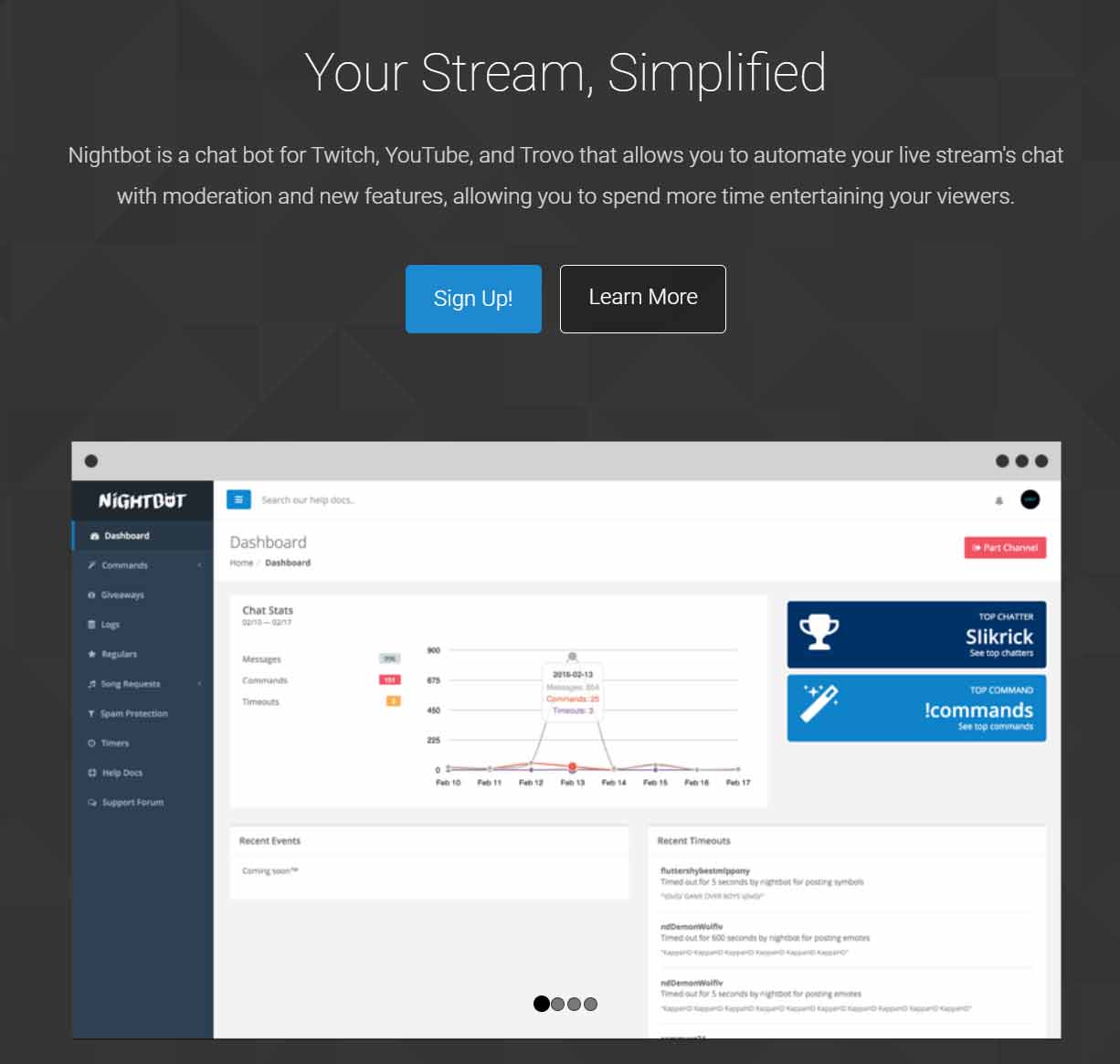
Nightbot is one of the most popular Twitch bots, and for a good reason. It offers a range of features, including custom commands, spam protection, song requests, giveaways, and more. Nightbot is easy to set up, and you can customize it to fit your stream's needs. It also has a web dashboard, which allows you to manage your bot settings from anywhere.


nightbot frontpage
 

2. Streamlabs Chatbot

Streamlabs Chatbot is another popular Twitch bot that offers a range of features. It integrates with Streamlabs OBS, making it easy to use if you're already using Streamlabs for your stream. Some of the features offered by Streamlabs Chatbot include custom commands, polls, song requests, and more. It also has a loyalty points system, which encourages viewers to stay engaged with your stream.

3. Moobot

Moobot is a simple Twitch bot that offers essential features such as spam protection, custom commands, and automated chat messages. Moobot is also easy to set up and use, making it a great option for streamers who are new to using bots. Moobot also offers integration with Streamlabs OBS and has a web dashboard that allows you to manage your bot settings from anywhere.

4. Wizebot

Wizebot is a more advanced Twitch bot that offers a wide range of features. It includes custom commands, song requests, giveaways, polls, and more. Wizebot also has a loyalty points system, which encourages viewers to stay engaged with your stream. Additionally, Wizebot offers integration with a range of other tools, such as Discord and Twitter.

5. Streamelements

Streamelements is another popular Twitch bot that offers a range of features. It includes custom commands, song requests, giveaways, polls, and more. Streamelements also has a loyalty points system, which encourages viewers to stay engaged with your stream. Additionally, it offers integration with a range of other tools, such as OBS and Discord. Streamelements also offers a web dashboard, which allows you to manage your bot settings from anywhere.

Conclusion

There are plenty of Twitch bots available, each with its unique set of features. The bots mentioned in this article are some of the best Twitch bots available, and each offers a range of features that can help you improve your stream. When choosing a bot, make sure to consider the features that are most important to you and your audience. With the right bot, you can create a more engaging and interactive stream for your viewers.

best time to stream on twitch

Unlocking Twitch Success: How to Find the Perfect Time to Stream

Picture this: You hit go live, pour your energy into an incredible stream, and watch the viewer count climb steadily as engaged fans chat and interact. Now imagine the alternative, streaming into the void with minimal eyes on your content. The difference often comes down to one crucial factor: timing.

Streaming on Twitch can be incredibly rewarding, but choosing the right time to go live can dramatically impact your growth, engagement, and even your long-term success on the platform. Whether you're a new creator building from scratch or an established streamer looking to level up, understanding when your audience is actually online makes all the difference. Let's break down proven strategies to help you nail your schedule.

Start With Your Audience and Their Time Zones

The foundation of any smart streaming schedule is knowing who you're streaming for. If your viewers are mostly in North America, for instance, evenings and weekends in their local time tend to work best when people are unwinding after work or school. A slot that feels like prime time on the West Coast might still catch East Coast folks before they call it a night.

Global audiences add another layer. What feels like late night in the US could be perfect early evening for European or Asian viewers. Always factor in time zones early so your content reaches the people most likely to show up, stick around, and become loyal fans.

Current Peak Viewing Hours on Twitch in 2026

Twitch still sees its highest overall viewership during late afternoon and evening hours, often between roughly 3 PM and 7 PM Pacific Time on weekdays, with weekends delivering even broader windows of activity. These periods attract massive audiences looking to relax and discover new content.

That said, high viewer numbers come with fierce competition. Thousands of other creators are live at the same time, making it tougher for smaller or growing channels to stand out. Recent data shows that many successful streamers actually grow faster during slightly off-peak slots or morning hours when the viewer-to-streamer ratio is more favorable. The goal isn't always chasing the absolute busiest time; it's finding the sweet spot where enough people are online but fewer creators are competing for their attention.

  • High-viewership windows typically hit late afternoon through evening
  • Weekends, especially Saturdays and Sundays, often deliver strong overall engagement
  • Your specific category or game can shift these patterns dramatically, so always check category-specific trends

Quick Time Zone Conversions for Common Peak Windows

To make planning easier, here’s how popular Pacific Time windows translate across major zones:

  • Eastern Time: Add 3 hours
  • Central Time: Add 2 hours
  • Mountain Time: Add 1 hour
  • UTC: Add 7 or 8 hours (depending on daylight saving time)

Use Twitch’s Built-In Analytics to Make Data-Driven Decisions

Twitch gives you powerful, personalized insights directly in your Creator Dashboard. Head to the Analytics section and check the Research panel, which includes the Time to Stream data. This tool breaks down the best days and times to go live based on average viewers, active channels, and your own historical performance.

You can analyze trends over the past 7 or 28 days and filter results by category, language, or region. It helps you spot when your target audience is most active, when competition tends to be lower, and how your channel performs at different times. Combined with your Stream Summary reports, these tools turn guesswork into a clear strategy.

best time to stream analytics

Experiment, Track Results, and Build Consistency

Even the best data benefits from real-world testing. Try streaming at different times and days over a few weeks, then review your analytics to see what actually worked for your channel. Look at concurrent viewers, chat activity, retention, and new follower growth.

Once you spot promising windows, commit to a consistent schedule. Viewers love knowing exactly when they can catch you live, and the algorithm rewards reliability. You can also time streams around big game releases, holidays, or community events, but remember that competition spikes during those moments too. Balance is everything.

Bonus Tip: Supplement With Third-Party Tools

For even deeper category-specific insights, many creators turn to trusted platforms like TwitchTracker and SullyGnome. These tools show live viewer counts, streamer activity, and viewer-to-channel ratios across games and content types, helping you discover hidden opportunities your own analytics might miss.

Finding Your Perfect Streaming Schedule

Determining the best time to stream on Twitch combines smart research, real data, and a bit of experimentation. Focus on your audience’s time zones, understand platform-wide trends, and lean on Twitch’s own Time to Stream analytics to guide your decisions. Add in consistent testing and third-party tools for the full picture.

The ideal schedule is unique to you, your content, and your community. Stay flexible, keep learning from the numbers, and above all, keep delivering the value that keeps viewers coming back. Get your timing right, and you’ll not only reach more people, you’ll build stronger, more loyal connections along the way.

Ready to grow? Open your Creator Dashboard, check those analytics, and start testing smarter times today. Your next big viewer spike could be just one well-timed stream away.

best twitch bitrate

Unlocking Crystal-Clear Twitch Streams: The Ultimate Guide to Bitrate in 2026

You're midway through an epic boss fight in your favorite game, chat is exploding with hype, and suddenly your stream turns into a blurry mess. Viewers start dropping off, and that sick play you just nailed? It looks like it happened underwater. The culprit? Your bitrate settings. Whether you're just starting out on Twitch or you've been streaming for years, getting your bitrate dialed in is the secret to delivering smooth, professional-looking content that keeps people watching.

obs bitrate setting

Bitrate is simply the amount of data your stream sends out every second, measured in kilobits per second (kbps). Think of it like the pipe carrying water to your viewers: a wider pipe (higher bitrate) means sharper details, richer colors, and fewer compression artifacts. Too narrow, and everything looks blocky or pixelated during fast action. But crank it too high, and you risk dropped frames, buffering for your audience, or even getting your stream cut off entirely.

What Makes the "Best" Bitrate for Your Twitch Stream?

The sweet spot depends on three big factors: your upload speed, your PC's horsepower, and the type of content you're creating. Fast-paced games like shooters or MOBAs need more bitrate to stay clear during chaotic moments. Slower games or talking-head streams can look fantastic with less.

Twitch's current official recommendations as of 2026 keep things straightforward and viewer-friendly:

  • 1080p at 60 FPS: 4500 to 6000 kbps. This is the gold standard for most streamers who want that crisp, modern look without overwhelming their connection.
  • 720p at 60 FPS: 3500 to 4500 kbps. Perfect if you want rock-solid stability and broader accessibility.
  • 720p at 30 FPS: 2500 to 3500 kbps. Great for lower-end setups or when your upload speed is more modest.

These numbers have evolved from earlier caps. Back in 2021 many pushed toward 8000 kbps, but today's guidelines focus on 6000 kbps as the reliable maximum for the best compatibility across all viewers. The platform's ingest servers have a hard limit around 8500 kbps (total, including audio), beyond which your stream can get rejected or heavily transcoded.

Twitch's Current Maximum Bitrate Rules

Here's the no-nonsense update: Twitch recommends a maximum of 6000 kbps for standard streamers to ensure smooth playback for everyone, including those on mobile or slower connections. Partners and higher-tier creators sometimes access slightly elevated limits (up to around 8500 kbps in practice), but even then it's not a free-for-all. Exceeding the hard ingest cap risks your broadcast getting dropped entirely.

Why the cap? It keeps the platform running efficiently and prevents viewers from needing massive bandwidth just to watch. The good news? 6000 kbps at 1080p60 still looks fantastic when paired with the right encoder and settings. If you're hitting buffering complaints, dropping 500-1000 kbps often solves it with almost no noticeable quality loss.

Beyond Bitrate: The Full Picture for Pro-Level Quality

Bitrate isn't the only player in the game. Your encoder choice, resolution, frame rate, and preset all work together like instruments in an orchestra.

For most creators in 2026, NVENC (on NVIDIA cards) or x264 (CPU-based) remain the go-to options. Newer AV1 encoders are gaining traction for supported hardware, delivering better quality at lower bitrates, but they're not universal yet. Stick with CBR (constant bitrate) mode, a 2-second keyframe interval, and the "high" or "max quality" preset for the best results.

Audio deserves love too: Twitch caps it at 160 kbps (AAC codec), with 128-160 kbps being ideal for clear voice and game sound without eating into your video budget.

Practical Tips to Nail Your Settings Every Time

Start simple. Run a speed test and aim to use no more than 75-80% of your upload speed. If your internet tops out at 10 Mbps upload, 6000-7500 kbps total (video plus audio) is plenty safe.

Then test, test, test. Fire up Twitch Inspector or OBS's built-in stats to monitor dropped frames and connection health. Stream privately first, watch the VOD yourself, and ask a few trusted friends for feedback. Fast-motion scenes are the real test; if your character blurs during quick turns, you probably need a slight bitrate bump or a resolution tweak.

Pro streamers also swear by downscaling strategically. Streaming at 936p or 900p instead of full 1080p can actually look sharper at the same bitrate because you're giving each pixel more data. And remember: stability beats perfection. A rock-solid 720p60 stream will retain more viewers than a glitchy 1080p one every single time.

Finally, keep an eye on emerging tech. Twitch has been expanding 1440p (2K) beta options with higher recommended bitrates (around 7500 kbps) for eligible creators using modern codecs. If you're in the program, it opens up even more headroom for ultra-sharp streams.

Ready to Level Up Your Stream?

Finding your perfect bitrate is part science, part art, and a whole lot of experimentation. Start with Twitch's 6000 kbps sweet spot for 1080p60, tweak based on your hardware and internet, and always prioritize a stable experience for your audience. When your stream looks sharp, stays smooth, and loads fast for everyone, you'll notice the difference in chat energy and follower growth almost immediately.

Now go fire up OBS, adjust that bitrate slider, and give your viewers the high-quality experience they deserve. Your next legendary stream is just a few settings away.

best twitch tags for new streamers

Cracking the Code on Twitch Tags: How New Streamers Can Get Discovered in 2026

Picture this. You just hit go live for the very first time. Your overlay looks sharp, the game is running smooth, and you are ready to chat with whoever shows up. But the minutes tick by and the viewer count stays stuck at zero. Sound familiar? For most new streamers, discoverability is the biggest early hurdle. The good news? There is a built-in tool sitting right in your stream settings that can quietly put your broadcast in front of the exact people who want to watch it. That tool is tags.

Twitch tags are short, searchable labels you add to your stream. Viewers use them to filter live channels, and the platform’s discovery system uses them to surface your content in searches and recommendations. You can now add up to ten tags per stream, and they work like keywords that tell both the algorithm and potential viewers exactly what kind of experience you are offering. The key is choosing the right ones and then checking what actually works.

Just Chatting: Build Real Connections With Your Audience

If your streams revolve around conversation, stories, or hanging out with chat, the Just Chatting space is perfect for you. It is still one of the most active and friendly categories on the platform. These tags help viewers looking for personality-driven content find you fast.

  • JustChatting
  • Chill
  • Cozy
  • AMA
  • TalkShow
  • QandA
  • Storytelling
  • CurrentEvents
  • Lifestyle
  • Advice

Pro tip: Pair a broad tag like JustChatting with something more specific such as Cozy or Chill. It narrows the audience to people who want relaxed vibes instead of high-energy chaos.

Gaming: Stand Out in a Crowded Category

Gaming remains Twitch’s biggest draw, but broad tags alone rarely cut it anymore. The platform’s 2026 search updates reward specificity. Tell viewers exactly what kind of gameplay they will see so you attract the right crowd instead of random drop-ins.

  • Gaming
  • FirstPlaythrough
  • Speedrunning
  • RetroGaming
  • Multiplayer
  • SinglePlayer
  • Strategy
  • FirstPersonShooter
  • ActionAdventure
  • Roleplaying

New streamers often see better results mixing one general gaming tag with a niche one like FirstPlaythrough or BeginnerFriendly. It signals authenticity and lowers the barrier for viewers who hate feeling lost.

New Streamer & Small Streamer Community: Grow With Your People

Being new is not a weakness; it is a community. Tags built around growth, beginners, and small creators help you connect with viewers who love supporting up-and-coming talent. These tags also put you in front of other new streamers who might raid, collab, or simply hang out.

  • BeginnerFriendly
  • SmallStreamer
  • NewStreamer
  • SmallStreamerCommunity
  • StreamSupport
  • GrowthMindset
  • PlayingWithViewers
  • RisingStreamer
  • StreamerNetwork
  • Chatty

Viewers searching these tags are often looking for approachable energy and genuine interaction. Use them honestly and you will build a loyal early audience that sticks around as you level up.

Creative & Artistic Streams: Find Your Niche Makers

Whether you draw, paint, build, craft, or make music, the creative side of Twitch is thriving. These tags connect you with people who appreciate the process as much as the final product.

  • Creative
  • ArtistsOnTwitch
  • ArtStream
  • DIY
  • MusicMakers
  • CreativeCommunity
  • CraftyStreams
  • Artisan
  • DigitalArt
  • LiveDrawing

Creative tags tend to have lower competition than pure gaming ones, so you can gain traction faster. Many viewers treat these streams like a relaxing virtual studio visit.

Music: Perform, Share, and Connect Through Sound

Musicians, producers, and singers have a dedicated audience waiting on Twitch. These tags help fans of live performances and behind-the-scenes creation find your channel.

  • Music
  • LiveMusic
  • MusicProduction
  • SingerSongwriter
  • MusicCommunity
  • Acoustic
  • ElectronicMusic
  • OriginalMusic
  • JamSession
  • MusicianLife

Remember to switch tags when you change activities. A music tag during a guitar set will pull in totally different eyes than a gaming tag during your next play session.

How to Check Which Tags Are Actually Working for You

Twitch gives you a powerful way to see real results. Head to your Creator Dashboard, click Analytics, then open the Discovery tab. Scroll down to the Tags section. You will see every tag you used along with two key numbers: impressions (how many times viewers saw your stream because of that tag) and views (how many actually clicked in).

Study this data every week. Drop tags that get impressions but zero clicks. Double down on the ones driving both. Small tweaks here can dramatically change how many people discover you.

Quick Tips to Get the Most From Your Tags

  • Always use relevant tags. Misleading ones hurt your reputation and the algorithm notices.
  • Keep them specific. A tag like “BeginnerFriendly” beats a generic “Gaming” every time for new creators.
  • Experiment. Try three new combinations each month and track the results in Discovery analytics.
  • Tags have no spaces. Use camelCase or combined words like PlayingWithViewers or FirstPlaythrough.
  • Update them before every stream. Your content changes, so your tags should too.

Tags will not turn a boring stream into a viral hit overnight, but they will put your authentic self in front of the right people who are actively searching for exactly what you offer. Start simple, stay consistent, and watch the impressions turn into loyal viewers.

Happy streaming. You have got this.

best twitch extensions

Best Twitch Extensions - Full List of Top Extensions

Twitch extensions are tools that help streamers to engage with their audience, monetize their content, and make their streams more interactive. These extensions are created by third-party developers and are integrated into the Twitch platform, allowing streamers to add new features and functionalities to their streams.

1. Streamlabs

Streamlabs is a popular Twitch extension that helps streamers to customize their streams with alerts, overlays, and other graphics. It allows streamers to engage with their audience by adding interactive elements like polls and chatbots. Streamlabs also provides tools for monetization, such as donations and sponsorships.

Live streaming software

2. Nightbot

Nightbot is a chatbot that helps streamers to moderate their chat and engage with their audience. It allows streamers to create custom commands, timers, and spam filters. Nightbot also provides tools for monetization, such as donations and sponsorships.

3. BetterTTV

BetterTTV is a Twitch extension that enhances the Twitch chat experience by adding new features like custom emotes, chat badges, and chat colors. It also provides tools for moderation, such as blacklist and whitelist filters.

4. FFZ

FFZ (FrankerFaceZ) is another Twitch extension that enhances the Twitch chat experience by adding new features like custom emotes, chat badges, and chat colors. It also provides tools for moderation, such as blacklist and whitelist filters.

5. Streamelements

Streamelements is a Twitch extension that helps streamers to customize their streams with overlays, alerts, and other graphics. It allows streamers to engage with their audience by adding interactive elements like polls and chatbots. Streamelements also provides tools for monetization, such as donations and sponsorships.

6. Streamlabs Leaderboard

Streamlabs Leaderboard is a Twitch extension that allows streamers to create leaderboards for their viewers. It allows streamers to track and reward their most loyal viewers with points and prizes.

7. Twitch Prime

Twitch Prime is a premium subscription service that provides Twitch users with access to exclusive content, free games, and other perks. It also includes a free subscription to one Twitch channel per month, which can help streamers to increase their revenue and support.

8. Sound Alerts

Sound Alerts is a Twitch extension that allows streamers to add custom sound effects to their streams. It allows streamers to engage with their audience by adding unique sound effects to events like donations, follows, and subs.

9. Tiltify

Tiltify is a Twitch extension that allows streamers to raise money for charity. It allows streamers to set up charity campaigns and encourage their viewers to donate to a good cause.

10. Lightstream

Lightstream is a Twitch extension that allows streamers to create professional-quality streams without the need for expensive equipment or technical knowledge. It provides tools for customizing streams with overlays, alerts, and other graphics.

11. Twitcher

Twitcher is a Twitch extension that allows streamers to create custom overlays for their streams. It provides tools for customizing overlays with images, text, and other graphics. Twitcher also allows streamers to create unique alerts and notifications for events like donations, follows, and subs.

12. Deckboard

Deckboard is a Twitch extension that allows streamers to control their streams using a customizable stream deck. It provides tools for assigning custom actions to buttons, including hotkeys, macros, and other commands. Deckboard also allows streamers to monitor their streams using an activity feed and chat overlay.

13. VBI: Stream Design Factory

VBI: Stream Design Factory is a Twitch extension that provides streamers with professional-quality graphics and overlays. It includes a wide range of templates and designs that can be customized to match the streamer's brand. VBI: Stream Design Factory also provides tools for creating custom alerts and notifications.

14. StreamGifts

StreamGifts is a Twitch extension that allows streamers to receive gifts from their viewers. It allows viewers to send virtual gifts like balloons, confetti, and fireworks during the stream. StreamGifts also provides tools for tracking and displaying gifts in real-time.

15. Stream Manager

Stream Manager is a Twitch extension that allows streamers to manage their streams more efficiently. It provides tools for monitoring chat, viewing analytics, and managing stream settings. Stream Manager also allows streamers to schedule their streams and view their upcoming events.

These are just a few of the best Twitch extensions that can help streamers to enhance their streams, engage with their audience, and monetize their content. By using these extensions, streamers can create more professional-quality streams and grow their channel.

best twitch streaming software

Twitch remains one of the biggest live streaming platforms in 2026 for gamers, artists, musicians, and content creators. Choosing the right Twitch streaming software can dramatically improve your stream quality, reduce lag, boost audience engagement, and even help you multistream to YouTube, Kick, or TikTok. Whether you’re a complete beginner or a seasoned pro, the best software depends on your setup (PC, console, or low-spec device), budget, and how much customization you need.

In this updated 2026 guide, we’ve researched the latest versions, features, pricing, and real-world performance. We’ll cover the top options—OBS Studio, Streamlabs Desktop, Meld Studio, XSplit Broadcaster, Lightstream Studio, and NVIDIA App (ShadowPlay)—with pros, cons, and who each is best for. We also include a quick comparison table and pro tips for optimal Twitch settings.

How to Choose the Best Twitch Streaming Software in 2026

  • Budget: Most top tools have strong free tiers; paid upgrades unlock multistreaming, advanced overlays, or cloud features.
  • Experience level: Beginners love drag-and-drop interfaces; pros want unlimited customization and plugins.
  • Hardware: High-end PC? Go desktop apps. Console-only or low-spec? Choose cloud/browser options.
  • Key features to prioritize: Low CPU usage, built-in alerts/widgets, multistreaming, scene transitions, audio filters, and easy Twitch integration.
  • 2026 trends: Multistreaming (one stream → multiple platforms), vertical + horizontal output, unified chat, and lower resource usage are huge.

Now let’s dive into the best Twitch streaming software options.

  1. OBS Studio

    OBS Studio (version 32.1.2 as of April 2026) is the most popular free and open-source streaming software. It powers millions of Twitch streams thanks to its unmatched customization and performance.

    Key 2026 Features:
    - Unlimited scenes, sources, and transitions
    - Advanced audio mixer with noise suppression, VST plugins, and filters
    - Studio Mode + Multiview for safe previewing
    - Full plugin ecosystem (thousands available)
    - Native Twitch integration + multistream via plugins
    - Cross-platform: Windows, Mac, Linux

    Pros:
    - Completely free forever
    - Extremely lightweight when optimized
    - Infinite customization
    - Huge community and tutorials

    Cons:
    - Steeper learning curve for absolute beginners
    - No built-in alerts/widgets (you add them via plugins or Streamlabs plugin)

    Best for: Power users, tech-savvy streamers, and anyone who wants maximum control without spending a dime.


  2. Streamlabs Desktop

    Streamlabs Desktop (built on OBS) remains a top choice for new Twitch streamers who want polished streams without heavy setup.

    Key 2026 Features:
    - Beautiful pre-made themes, overlays, and alerts
    - Built-in multistreaming (Twitch + YouTube + more)
    - Collab Cam for easy guest appearances
    - Cloudbot, tipping, merch integration
    - Dual output (horizontal + vertical)
    - Streamlabs Ultra subscription unlocks 1000+ premium assets

    Pricing: Free core app; Streamlabs Ultra is $27/month or $189/year for full features.

    Pros:
    - Super easy interface with everything built-in
    - Great for monetization right away
    - Seamless Twitch alerts and chat

    Cons:
    - Slightly higher CPU usage than plain OBS
    - Some advanced features locked behind Ultra paywall

    Best for: Beginners, gaming streamers who want quick setup and professional-looking streams.


  3. Meld Studio

    Meld Studio has exploded in popularity in 2026 as a fresh, free OBS alternative built from the ground up for modern creators.

    Key Features:
    - Native Windows + Mac (including Apple Silicon optimization)
    - Built-in effects (chroma key, color grading, drop shadows) — no plugins needed
    - Free multistreaming to Twitch, YouTube, Kick + unified chat
    - Multi-canvas (different layouts per platform)
    - Low resource usage and bi-weekly updates

    Pricing: Completely free (no paid tier required for core streaming).

    Pros:
    - Modern, clean interface that’s easier than OBS
    - Everything works out of the box
    - Excellent performance on Mac and lower-end PCs
    - Rapid development based on streamer feedback

    Cons:
    - Newer platform (smaller plugin library, though less necessary)
    - Still growing community compared to OBS

    Best for: Beginners-to-intermediate streamers who want OBS power without the hassle, especially Mac users or those who multistream.
  4. XSplit Broadcaster

    XSplit Broadcaster continues strong in 2026 with regular updates focused on workflow improvements.

    Key 2026 Updates:
    - In-app Twitch broadcast details editor (title, tags, category)
    - Revamped Preview Editor
    - Spout2 support for VTubers
    - Powerful templates, transitions, and plugins

    Pricing: Free tier available; Premium subscription around $15/month or lifetime options.

    Pros:
    - High production value and 4K support
    - Smooth transitions and advanced tools
    - Excellent for event-style or polished streams

    Cons:
    - Paid for full features
    - Higher learning curve than Streamlabs/Meld

    Best for: Serious creators who want pro-level production tools.


  5. NVIDIA App with ShadowPlay

    NVIDIA ShadowPlay (now integrated into the free NVIDIA App) delivers low-latency streaming and recording powered by your GPU.

    Key 2026 Features:
    - Instant Replay, highlights, and easy clipping
    - AV1 encoding support (RTX 40-series+)
    - Minimal performance impact
    - Simple Twitch streaming with one click

    Pricing: Completely free with compatible NVIDIA GPU.

    Pros:
    - Extremely lightweight and high-quality
    - Great for quick recordings + streams

    Cons:
    - Only works with NVIDIA graphics cards
    - Fewer scene customization options

    Best for: Gamers with NVIDIA GPUs who want simple, high-performance capture.


  6. Lightstream Studio

    Lightstream Studio (golightstream.com) is a browser-based, cloud-powered solution — no powerful PC or capture card required.

    Key Features:
    - Stream directly from Xbox Series X/S, PS5, or low-spec PCs
    - Add overlays, alerts, and effects in the cloud
    - Free tier + premium plans for higher resolution (up to 1080p60) and more features

    Pros:
    - Zero download — works in any browser
    - Perfect for console-only streamers
    - Simple and fast setup

    Cons:
    - Limited customization compared to desktop apps
    - Premium required for best quality

    Best for: Console gamers (Xbox/PS) or anyone without a gaming PC.


Quick Comparison Table (2026)

SoftwarePriceEase of UseBest ForMultistreamResource UseConsole Support
OBS StudioFreeMediumCustomization & prosVia pluginLowWith capture card
Streamlabs DesktopFree / UltraEasyBeginners & alertsYes (paid)MediumWith capture card
Meld StudioFreeEasyModern free all-in-oneYesVery LowWith capture card
XSplit BroadcasterFreemiumMediumPro productionPremiumMediumWith capture card
Lightstream StudioFree / PremiumVery EasyConsole & cloudYesCloud-basedNative Xbox/PS
NVIDIA ShadowPlayFree (GPU)Very EasySimple GPU streamingBasicVery LowPC only

Pro Tips for Better Twitch Streams in 2026

  • Use NVENC (new) or AV1 encoder for best quality/performance.
  • Recommended Twitch settings: 1080p60 at 6000 kbps CBR, 2-second keyframe interval.
  • Always test with Twitch Inspector before going live.
  • Add a good mic + noise suppression (OBS/Streamlabs filters work great).
  • Consider multistreaming to grow faster — most tools now support it natively or via plugins.

Final Verdict: Which Should You Choose?

  • Just starting out? → Meld Studio or Streamlabs Desktop.
  • Want total control and zero cost? → OBS Studio.
  • Console gamer? → Lightstream Studio.
  • NVIDIA GPU? → Start with ShadowPlay and upgrade to OBS/Meld later.
  • Pro production? → XSplit Broadcaster.

Try 2–3 options (most are free to download/test) and see what feels best for your workflow. The right Twitch streaming software will make streaming more fun and help you grow your channel faster in 2026.

Article fully updated May 2026 with latest software versions, features, and community feedback. Original images from the older version kept where they still accurately represent the software.